Search phrase
best traction socks for dogs
Start with the traction socks guide when the dog tolerates wearable paw gear and the main question is fit, grip coverage, rotation, cleaning, and supervised indoor use.
Senior dog mobility guide
Start with the problem your dog runs into most often: slipping on floors, getting into the car, climbing onto furniture, needing handler assistance, needing rest-break transport on longer outings, resting poorly, protecting beds around accidents, managing accidents around the home, or setting up a calmer feeding station.
This hub points each problem toward the right product category before comparing individual products. It is not a medical recommendation and should not be used to explain sudden changes in mobility, pain, behavior, appetite, or bathroom habits.
For a room-by-room audit before choosing a category, use the senior dog home mobility checklist.
Search path
Use these entry points when the search phrase is already clear. They route broad mobility questions to the page that answers the specific buying or setup problem first.
Search phrase
Start with the traction socks guide when the dog tolerates wearable paw gear and the main question is fit, grip coverage, rotation, cleaning, and supervised indoor use.
Search phrase
Start with the runner and rug guide when the problem is a repeated walking path through hallways, turns, doorways, or the route from bed to water and outside.
Search phrase
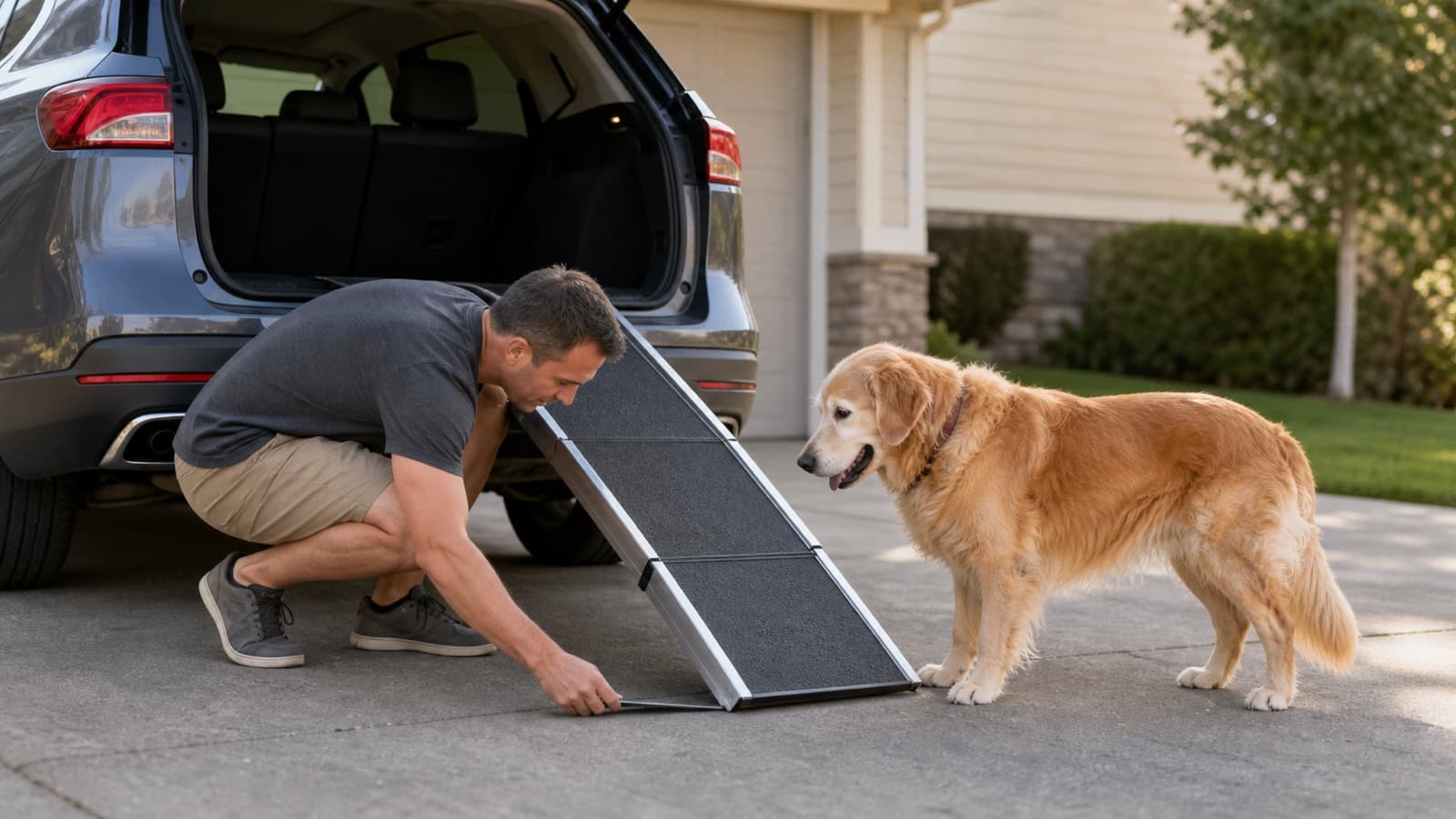
Start with the senior dog stairs guide when the dog can still step calmly and the buying question is bed, couch, or vehicle access height, step rise, tread depth, and surface grip.
Search phrase
Start with the wagon-versus-stroller selector when the dog needs rest-break transport but the transport type is not clear yet. Use the senior dog wagon guide once the comparison depends on cabin space, entry height, wheel control, product weight, and handler lifting burden.
Search phrase
Start with the hardwood slipping guide when the problem may be route setup, floor gaps, launch spots, nails, paw-pad hair, or a change that needs veterinary attention before shopping.
Search phrase
Start with the socks-versus-rugs guide when you are deciding whether the home needs a floor path, paw-level traction, or both before comparing individual products.
Search phrase
Start with the socks-versus-toe-grips guide when you are deciding between fabric foot gear, toe or nail grips, booties, rugs, or a vet check before opening product listings.
Decision path
The dog loses traction on hallways, kitchens, stairs landings, or the path between bed, water, and door.
Build a stable floor path first, then add wearable traction only when paw fit and tolerance make sense.
The dog hesitates before jumps, needs a lower access path, or needs the furniture and vehicle setup changed.
Compare the height, path width, storage, and training setup before choosing a ramp or stairs.
The dog needs supervised help standing, moving through short transitions, or using weak rear legs.
Separate full-body harnesses, rear slings, and handle-only walking harnesses before comparing products.
The dog can still enjoy outings, but needs a place to ride, rest, or avoid repeated walking on longer routes.
Compare cabin fit, low entry, ramp or canopy access, wheel control, brakes, fold size, and lifting burden before choosing a wagon or stroller.
The dog needs a resting surface that fits body size, sleep position, bolsters, and cleanup routine.
Start with usable sleep area and support profile, then compare cover care and entry height.
The home needs a cleanup plan around floors, beds, crates, furniture, or body coverage.
Choose surface protection, diapers, or male wraps by placement, fit checks, skin checks, and laundry load.
The dog still wants activity, but the play routine needs to stay gentle, supervised, and easy to clean.
Match toy style to chewing habits, food use, texture tolerance, and frustration level.
The dog eats or drinks from an awkward spot, spills around the bowl, or needs the feeding area measured without turning it into a medical claim.
Compare bowl height, capacity, spill containment, floor footprint, and cleaning first; treat coughing, regurgitation, appetite changes, or bloat-risk questions as vet-first.
Vet check
Cluster plan
This public hub links only to published, source-reviewed guide pages. It can expand as new non-medical senior dog support categories pass the same source, quality, public release, and browser checks.
Food, supplement, arthritis treatment, pain relief, and dementia topics should stay out of this hub until stronger expert review and claim gates exist.