Best lightweight car ramp
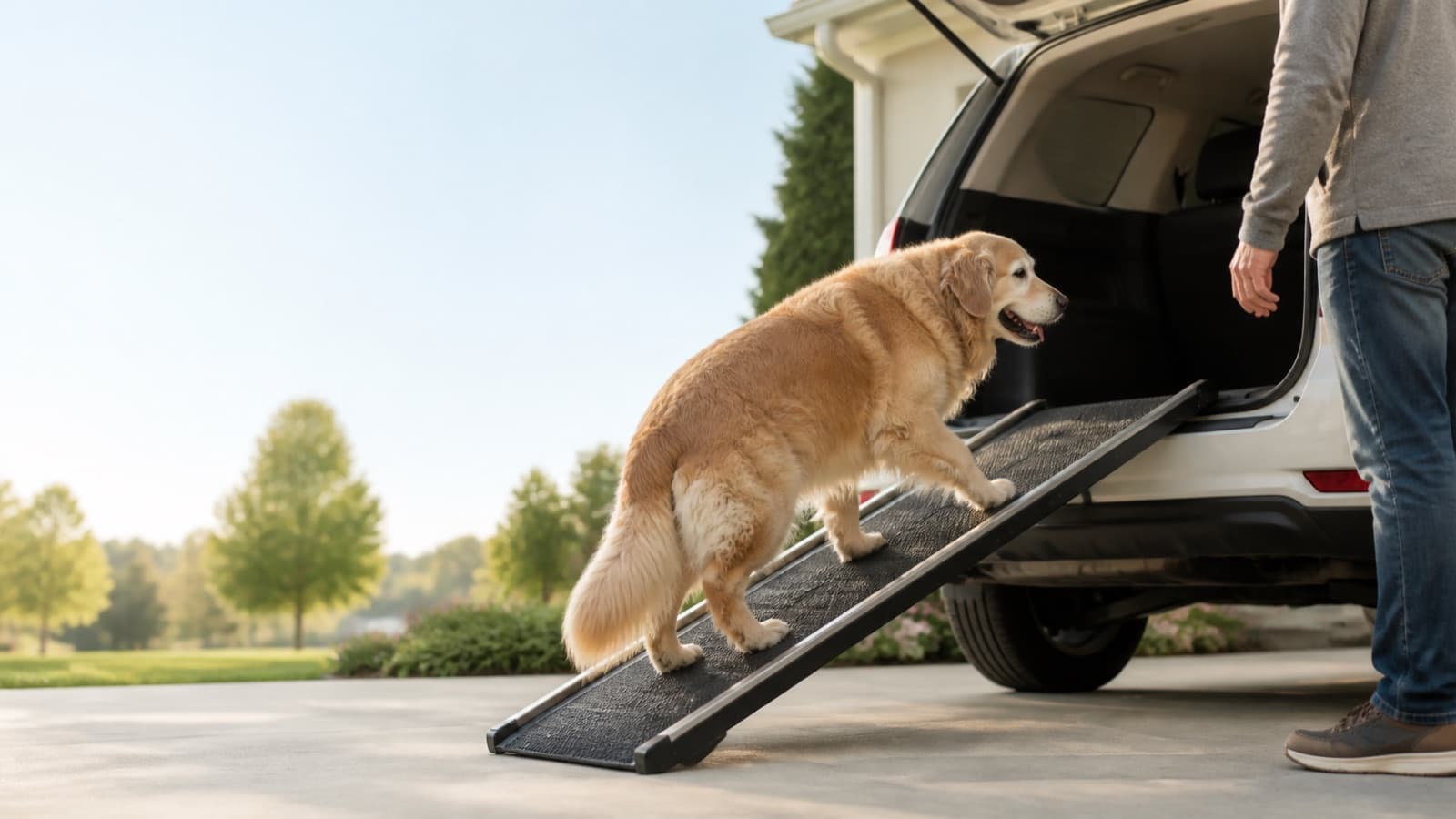
Happy Ride Folding Dog Ramp
- Best fit
- lightweight car access for dogs under 150 lb
- Skip if
- your dog needs a longer ramp for a high SUV or truck
Senior dog buying guide
Large senior dogs often need a different kind of ramp than small dogs. Use this broader guide when the decision spans body size, beds, sofas, mixed indoor/outdoor setup, or general ramp fit across more than one access point.
If the decision is specifically rear cargo, side-door, SUV, truck, or car storage fit, use the dedicated car-ramp guide instead. This page compares reviewed product specs and keeps product-detail pages as the place to confirm current buying details.
Reviewed picks
Start with the fit and skip notes, then open the current listing only for products that match your dog's size, routine, and handler setup.
Best lightweight car ramp
Best compact telescoping ramp
Best for taller vehicles
Best indoor bed ramp
Reviewed products: 4 source-reviewed picks.
Offer links: product-detail listings at Amazon.
Updated: May 31, 2026. Product-card images withheld until rights are approved.
Review standardsFit estimator
Side-view diagram
24 in rise at 18deg target angle.
This calculator compares listed product specs against your selected height, incline, dog weight, and carry limit. It is not a medical recommendation.
Buying logic
A longer ramp usually creates a gentler walking angle. This matters more for large senior dogs because a short ramp can still feel like a steep climb.
Look for a walking surface that gives traction without being harsh on paws. Rubber, carpet, and textured tracks behave differently indoors and outdoors.
A wider ramp can feel more stable for hesitant dogs. Side rails can help guide the path, but they do not replace supervision.
The listed weight limit should be comfortably above your dog's weight, especially if the dog moves slowly or pauses on the ramp.
A ramp that is technically strong enough may still be frustrating if it is too heavy to move, fold, or keep near the car, bed, or room where it is used.
Structured fit comparison
| Product | Best for | Length | Width | Capacity | Grip | Foldable | CTA |
|---|---|---|---|---|---|---|---|
| Happy Ride Folding Dog Ramp | lightweight car access for dogs under 150 lb | 62 in | 16 in | 150 lb | high-traction tread surface | Yes | Check current options on AmazonConfirm size, fit, variant, and availability |
| Happy Ride Compact Telescoping Dog Ramp | compact storage with adjustable vehicle reach | 70 in | 16 in | 300 lb | high-traction surface with rubber feet | No | Check current options on AmazonConfirm size, fit, variant, and availability |
| Happy Ride Extra Long Telescoping Dog Ramp | extra-long reach for higher vehicles | 87 in | 20 in | 300 lb | high-traction surface with side rails | No | Check current options on AmazonConfirm size, fit, variant, and availability |
| CozyUp Bed Ramp | bed access inside the home | 70 in | 16 in | 120 lb | heavy-duty carpet surface | No | Check current options on AmazonConfirm size, fit, variant, and availability |
Data-derived notes
Product notes
PetSafe
This ramp is best for lightweight car access for dogs under 150 lb. Its listed length is 62 inches, the walking width is 16 inches, and the listed capacity is 150 pounds. The surface uses high-traction tread surface, which should be compared against where your dog will use it most often. Before buying, check whether folds in half for vehicle storage works for your storage area and whether a 10 pound ramp is practical for the person who will move it.
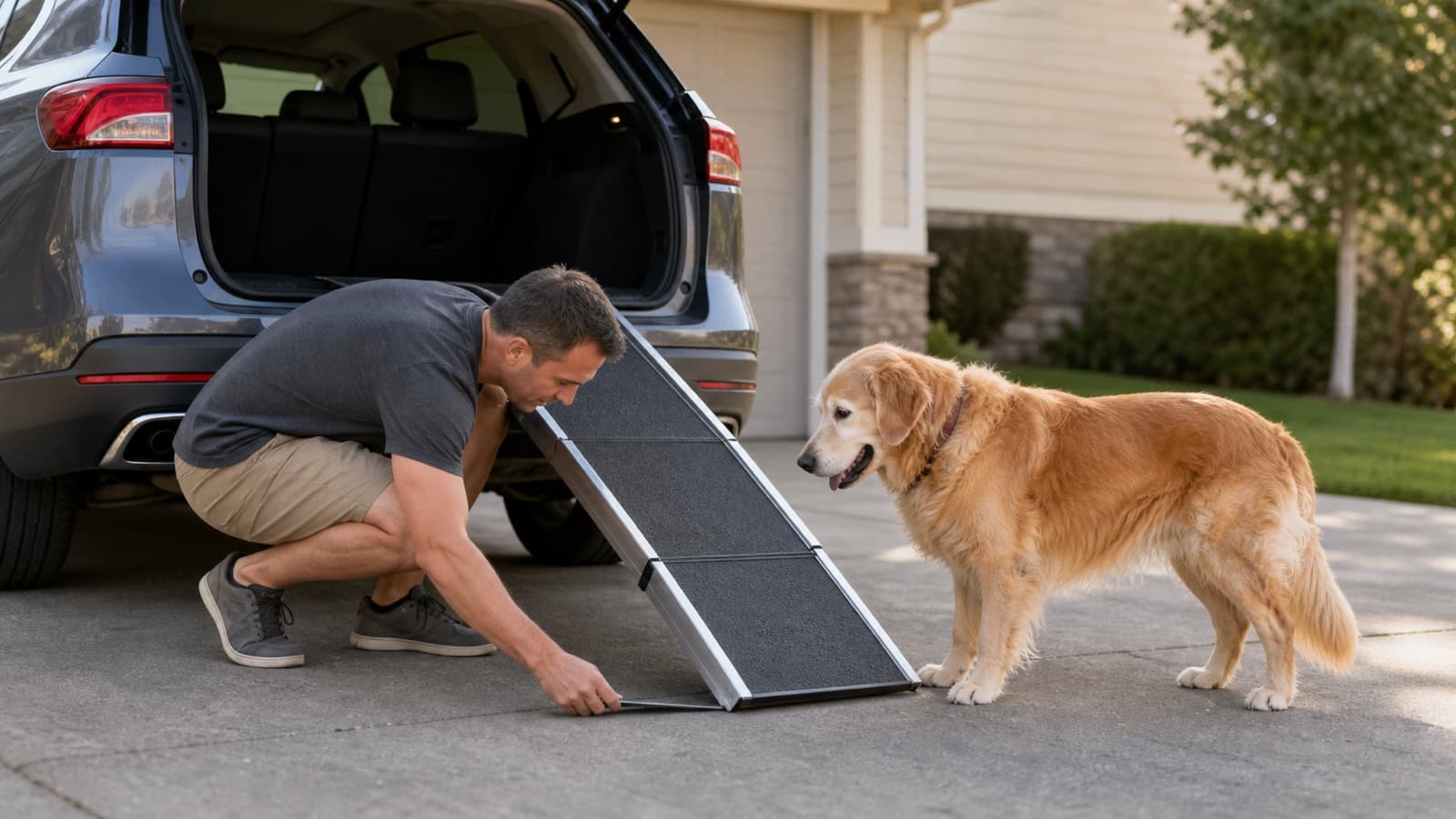
Setup note: Fold it open fully, set the rubber feet on stable contact points, and let the dog walk it flat before raising the incline. Safety note: Check that both contact points are stable before each use and supervise every climb. This is not a medical recommendation, and it should not be used to explain sudden pain or mobility changes.
PetSafe
This ramp is best for compact storage with adjustable vehicle reach. Its listed length is 70 inches, the walking width is 16 inches, and the listed capacity is 300 pounds. The surface uses high-traction surface with rubber feet, which should be compared against where your dog will use it most often. Before buying, check whether 28.5 x 16.5 x 5.8 in collapsed works for your storage area and whether a 14 pound ramp is practical for the person who will move it.
Setup note: Extend only as much length as the surface height needs, then confirm the telescoping sections are locked before use. Safety note: Keep fingers clear while sliding the sections and use a non-slip landing area at the top and bottom. This is not a medical recommendation, and it should not be used to explain sudden pain or mobility changes.
PetSafe
This ramp is best for extra-long reach for higher vehicles. Its listed length is 87 inches, the walking width is 20 inches, and the listed capacity is 300 pounds. The surface uses high-traction surface with side rails, which should be compared against where your dog will use it most often. Before buying, check whether 47 x 20 x 4 in collapsed works for your storage area and whether a 18 pound ramp is practical for the person who will move it.
Setup note: Extend it fully for higher surfaces and confirm the telescoping lock before inviting the dog up. Safety note: Keep fingers clear of sliding sections and do not let a dog use the ramp while it is being adjusted. This is not a medical recommendation, and it should not be used to explain sudden pain or mobility changes.
PetSafe
This ramp is best for bed access inside the home. Its listed length is 70 inches, the walking width is 16 inches, and the listed capacity is 120 pounds. The surface uses heavy-duty carpet surface, which should be compared against where your dog will use it most often. Before buying, check whether 70 x 16 x 25 in assembled works for your storage area and whether a 28 pound ramp is practical for the person who will move it.
Setup note: Place it beside the bed on a stable floor and give the dog time to practice with the carpeted surface. Safety note: Do not use it for dogs above the listed capacity or as a vehicle ramp. This is not a medical recommendation, and it should not be used to explain sudden pain or mobility changes.
Choice
Ramps can be easier for dogs that dislike stepping up repeatedly or need a smoother transition into a bed, sofa, or measured vehicle entry.
Use the car-ramp guide for rear cargo, side-door, SUV/truck height, folded storage, and vehicle-specific handling. Use this broader ramp guide when the comparison is large-dog fit across cars, furniture, and indoor setups.
A product cannot explain sudden mobility decline. If the change is new, painful, or severe, treat the ramp as a support tool and involve a veterinarian.
Setup
FAQ
Longer ramps usually create a gentler incline, which can be easier for a large older dog to approach. The right length still depends on the height of the car, bed, sofa, or step you are trying to reach; use the car-ramp guide when the only target is a measured vehicle entry.
A ramp can reduce repeated stepping, while stairs can be more compact. Neither option is automatically safer for every dog. Watch how your dog moves and ask a veterinarian about sudden pain or mobility changes.
Rubber, carpet, and textured walking tracks can all work. The better choice depends on whether the ramp is used indoors, outdoors, or around wet conditions.
Sometimes, but only if the ramp is long enough for the higher surface and still practical to move indoors. Many owners end up preferring different setups for the car and bedroom, so compare vehicle-only choices in the car-ramp guide.
If the change is sudden, painful, one-sided, or paired with appetite or behavior changes, talk with a veterinarian. A ramp can support access, but it should not be used to ignore a health change.